
Key Takeaways:
- What is GVM?: Gross Vehicle Mass is the absolute maximum weight your vehicle can legally weigh when fully loaded. It’s essential for safe and legal towing.
- Why It Matters: Understanding your GVM and related terms like ATM, Tare, GCM, can help you avoid fines, accidents, and vehicle damage, especially when hiring equipment.
- Stay Safe & Compliant: Learn common towing mistakes to avoid and how Diggermate’s delivery service can take the hassle out of equipment transport.
If you’re gearing up to tow a trailer or thinking about hiring a mini excavator for your next project, you’ve probably spotted the term ‘GVM’ floating around.
It’s more than just an acronym. Understanding your vehicle’s Gross Vehicle Mass (GVM) is essential for safe and legal towing on Australian and New Zealand roads. Get it wrong, and you could be looking at fines, insurance hassles, or worse – putting yourself and others at risk.
So, what is GVM all about? This guide explains everything you need to know, why it matters for your truck or trailer, and how knowing your limits ensures a safe Diggermate hire.
What Does GVM Mean?
Alright, let’s get down to brass tacks. What is GVM exactly, and why do you need to know about it?
GVM stands for Gross Vehicle Mass. It’s the absolute maximum weight your vehicle is legally allowed to weigh when it’s fully loaded up. This isn’t just about the trailer you’re towing. It includes everything else you’ve got in or on your vehicle. Think of it as your car or ute’s total weight limit, set by the manufacturer.
Here’s what’s factored into your GVM:
- Your vehicle’s own weight (Tare Mass): That’s the car or ute itself, usually with a nearly empty fuel tank.
- Passengers: Every person in the vehicle adds to the total.
- Fuel: A full tank of fuel is heavier than you might think.
- Accessories: Bull bars, roof racks, canopies, extra batteries – they all contribute.
- Cargo: All your tools, luggage, camping gear, building materials in the tray or boot.
- Towball Download (TBD): This is the downward force a connected trailer puts on your vehicle’s towbar. It’s a critical part of your vehicle’s overall load.
How to Calculate Your GVM
To make sure you’re staying within your GVM, you essentially add up all the weights listed above. Your vehicle’s manufacturer specifies its maximum GVM on a compliance plate, usually found in the engine bay or on the door jamb.
Why is this important? Exceeding your GVM isn’t just a number on a page. It means:
- Safety Risks: Your vehicle’s brakes, suspension, and tires aren’t designed to handle that extra weight, making it harder to stop, control, and increasing the risk of an accident.
- Legal Trouble: Police and transport officers regularly check vehicle weights. Get caught over your GVM, and you’re looking at hefty fines and potential loss of demerit points.
- Insurance Headaches: If you’re involved in an accident while overloaded, your insurance company could void your claim, leaving you high and dry.
- Vehicle Damage: Sustained overloading puts immense strain on your vehicle’s components, leading to premature wear and tear, and costly repairs down the track.
Understanding your GVM is about being a responsible driver and protecting your investment. It’s the smart way to tow.
Why GVM Matters When Hiring Equipment
Heaps of our Diggermate customers swing by to pick up their hired machines, like mini excavators or skid steers, with their own vehicles. This is the time when understanding Gross Vehicle Mass becomes super important.
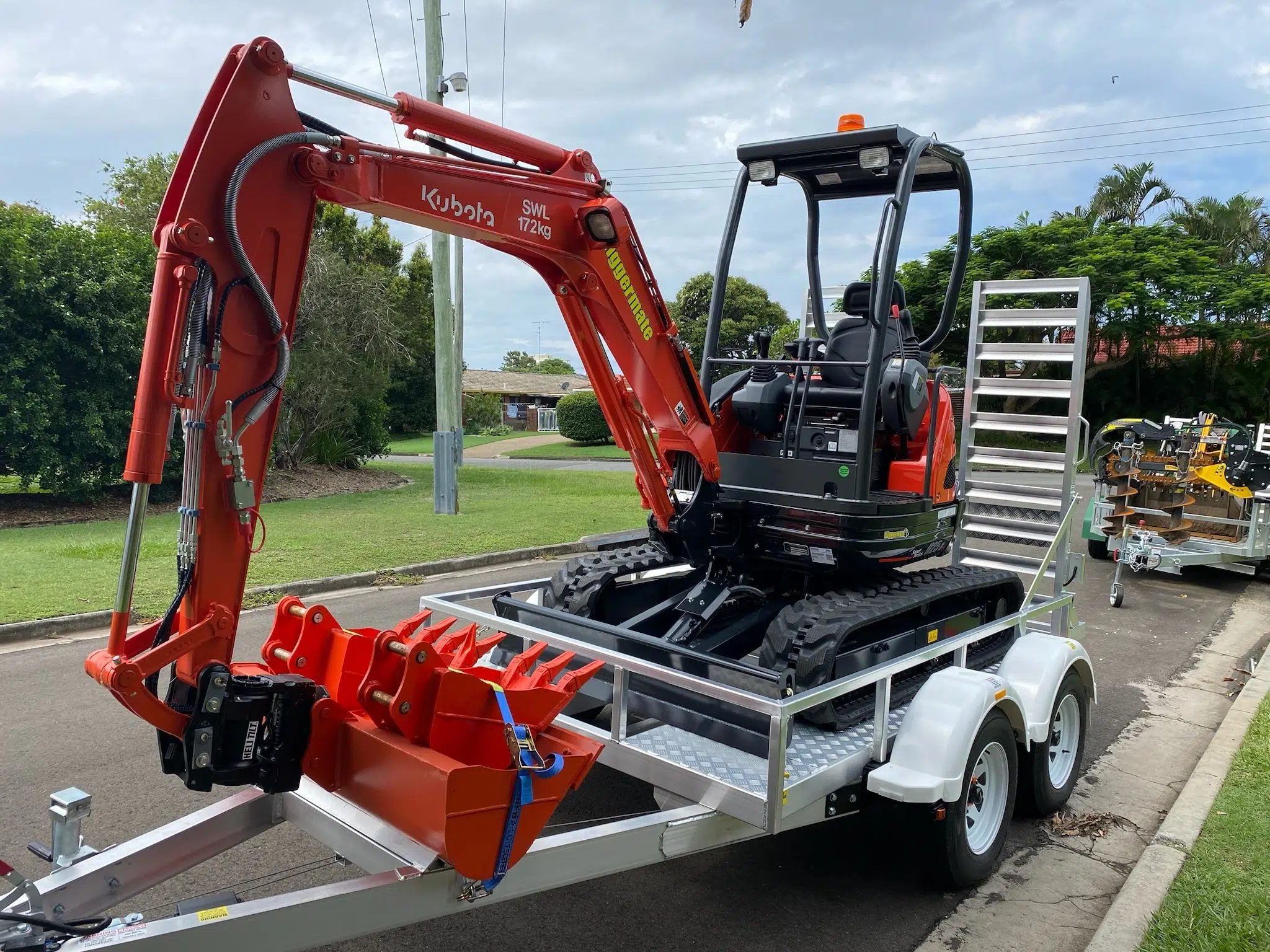
Say you’re hooking up a 1.7-tonne mini excavator to an electric-braked trailer. You’ll need to make sure your vehicle’s GVM and towing capacity can safely handle that total weight, including the Aggregate Trailer Mass (ATM) of the loaded trailer, and keep everything well within legal limits.
But here’s where people often trip up with some common mistakes:
- Underestimating Total Trailer Weight: Beyond just the machine, remember to factor in the trailer’s own weight, fuel, and any attachments (like augers or buckets). Every kilogram adds up, often surprisingly quickly!
- Forgetting Towball Download: The weight pushing down on your vehicle’s towball directly impacts your vehicle’s payload and, crucially, its GVM. Failing to account for this can unexpectedly push your vehicle over its legal maximum.
- Overloading Your Vehicle: Carrying extra materials or tools in your ute or 4WD tray can easily exceed your vehicle’s GVM, even if the towed load is within its own limits. Your vehicle’s overall weight must remain compliant.
Getting a handle on GVM helps you make smart, safe calls, and steer clear of fines, accidents, or damage to your vehicle.
Related Terms: GVM, ATM, Tare, and More
So, you’ve got a handle on your vehicle’s GVM. But when you’re hooking up a trailer, a few other important weight terms pop up, and they all work together to keep you safe and legal on the road. Here’s a quick rundown:
- Tare Weight: The empty weight of a vehicle or trailer, as it leaves the factory, without cargo or passengers.
- ATM (Aggregate Trailer Mass): The maximum total weight a trailer can be when uncoupled from a vehicle and fully loaded.
- GTM (Gross Trailer Mass): The maximum weight of a trailer when coupled to a tow vehicle and loaded (excludes weight on the towball).
- GCM (Gross Combination Mass): The absolute maximum combined weight of the tow vehicle and fully loaded trailer hitched together – ensuring the entire rig is safe and legal.
Understanding these terms is vital for legal, safe towing, protecting your vehicle, and choosing the right transport for your hired machinery.
Common DIY Towing Mistakes (and How to Avoid Them)
Towing equipment can seem straightforward, but overlooking crucial details can compromise safety and legality. Here are common mistakes and how to avoid them:
- Guessing Towing Capacity: Always check your vehicle’s manual/compliance plate for exact towing, GVM, and GCM limits to avoid dangerous overloading and legal issues.
- Ignoring Local Regulations: Research state-specific towing laws and license requirements (e.g., over 4.5T) to avoid varying fines and penalties.
- Overloading Trailer/Tray: Be mindful of all added weight (materials, tools); know your total load and use weighbridges if unsure, as police can fine for overloads.
- Improper Load Distribution: Position heavier items over or slightly in front of trailer axles for correct towball weight and stability, preventing dangerous sway.
- Insufficient Load Securing: Use multiple, load-rated tie-downs at strong points, and always re-check load security before and during travel to prevent shifting.
Want to Avoid the Hassle? Let Us Deliver.
At Diggermate, we know that GVM and towing logistics aren’t for everyone. Whether you’re a busy tradie needing on-site convenience or a DIY homeowner unsure of towing limits, our delivery and pickup service takes the stress out of equipment hire.
- No Towing Worries: Skip GVM calculations and needing a suitable tow vehicle.
- On-Site Convenience: We deliver directly to your job site, saving time and effort.
- Early Start: Scheduled 7:30–8:30 am drop-offs ensure your equipment is ready when your workday begins.
- Flexible Pickup: Tell us when you’re done and we’ll arrange pickup from your site.
- Cost-Effective Simplicity: Avoid towing vehicle expenses. Our delivery is often a more cost effective solution.
Not sure about your towing limits, or just prefer ease? Let Diggermate deliver your equipment directly to you for a truly hassle-free hire.
Equipment That’s Easy to Tow (When You’re Within Limits)
If your vehicle can legally tow up to 3.5 tonnes and you’re confident with loading, Diggermate offers compact gear that’s easy to hitch up yourself.
- Mini Excavator Hire: User-friendly and trailer-ready for tight access jobs. Many models are light enough for common towing vehicles like your ute or 4×4, provided they’re loaded correctly.
- Skid Steer Hire: Highly effective for tight access jobs. Our smaller models are towable and very nimble, perfect for various tasks.
- Tipper Trailers & Equipment Packages: We’ve bundled our equipment with a suitable trailer, so there’s no guesswork. Just hitch up and get the job done!
Still Have Questions? Talk to Your Local Diggermate
Every project and vehicle setup is different, so if you’re ever unsure about towing capacity, legal weight limits, or what equipment’s best for your job, there’s no need to stress. Just reach out to your local Diggermate expert. We’re always ready to offer friendly, personalised advice on safe towing and your best hire options.
The Takeaway: Why GVM Should Be on Your Radar
Whether you’re a weekend warrior tackling a backyard reno with a mini excavator or a tradie moving gear with a skid steer, understanding your GVM is essential. Getting a handle on these limits helps you:
- Tow safely and legally
- Protect your vehicle from damage
- Avoid fines and insurance issues
- Choose the right equipment hire method for your needs
Staying informed about GVM isn’t just about avoiding trouble; it’s about ensuring every job, big or small, gets done safely and efficiently.
Contact us to find the right solution for your next job, and check out these other helpful guides from Diggermate.