
Key Takeaways:
- ATM vs GTM: ATM is the max weight of a loaded trailer when it’s unhitched. GTM is the max weight when it’s hitched to a vehicle. The difference is the towball weight.
- Ratings are for Safety: The numbers on your trailer’s compliance plate are your manufacturer’s promise of what the equipment can safely handle.
- Hard Limits, Not Guidelines: Your trailer’s ATM and GTM are non-negotiable. You must stay below them to ensure the frame, axles, and suspension can do their job.
If you tow equipment regularly, whether it’s a mini excavator on a trailer or just a load of soil, knowing your trailer weight limits is crucial. Get it wrong, and you’re looking at fines, damage to your vehicle, or worse, a dangerous incident on the road.
In this guide, we’ll explain the difference between ATM vs GTM, why both numbers matter, and how to stay compliant and safe when hiring gear from Diggermate.
What is ATM?
So, what does aggregate trailer mass mean to you and your towing?
ATM is the absolute maximum weight a fully loaded trailer is allowed to be. The key thing to remember here is that this measurement is taken when the trailer is unhitched from your vehicle.
Think of it as the total weight of the trailer when it’s just sitting in the driveway, with its jockey wheel down. This figure includes:
- The empty trailer itself (its Tare Weight)
- Any load or equipment on board (like a mini excavator)
- The weight of the jockey wheel, which is carrying the towball mass
You’ll find your trailer’s ATM clearly stamped on its compliance plate. It’s the manufacturer’s guarantee that the trailer’s frame, axles, tyres, and coupling can safely handle this weight. Exceeding this figure is not only illegal but can seriously compromise the structural integrity of the trailer. Always stay below your ATM.
What is GTM?
GTM, or Gross Trailer Mass, is similar to ATM, but with one crucial difference. It’s the maximum weight of the loaded trailer while it’s hitched to your tow vehicle.
In simple terms, GTM weight, meaning the total weight being carried by the trailer’s wheels and axles, includes:
- The empty trailer (Tare Weight)
- The load or equipment on board
- But it deliberately excludes the towball weight, because that weight is being supported by your vehicle, not the trailer’s axles.
This is why your GTM rating is always lower than your ATM rating. It ensures that even when the tow vehicle is taking some of the load, the trailer’s axles and suspension are not being overloaded, which could lead to a dangerous failure on the road.
ATM vs GTM: Key Differences
To put the atm vs gtm debate to rest, here’s a quick comparison of the key details at a glance.
| Feature | ATM (Aggregate Trailer Mass) | GTM (Gross Trailer Mass) |
| Towing State | Unhitched (standalone trailer) | Hitched to towing vehicle |
| Includes Towball Load? | ✅ Yes | ❌ No |
| Found on Compliance Plate? | ✅ Yes | ✅ Yes |
| Legal Importance | Ensures the entire trailer isn’t overloaded. | Ensures the suspension & axles aren’t overloaded. |
In short, understanding both values ensures you don’t overload the trailer’s frame (ATM) or its axles and suspension (GTM). Both are essential for a safe and legal tow.
Why Tradies & DIYers Should Care About GTM & ATM
Understanding GTM vs ATM isn’t just jargon. It’s about real-world safety and compliance. Before you hit the road, make it a habit to check these four crucial figures:
- Trailer ATM & GTM: The legal limits for the trailer itself.
- Your Vehicle’s Towing Capacity: Your ute’s maximum rated towing weight.
- Towball Download Limit: The weight limit for your towball.
If you get it wrong, you could be facing serious consequences:
- Voided Insurance: Overloading can lead to denied claims in an accident.
- Fines & Defects: Roadside checks can result in fines and defect notices.
- Dangerous Performance: An overloaded rig causes unsafe braking and loss of control.
- Mechanical Damage: All that extra weight can cause costly damage to your vehicle.
Example: Towing a Mini Excavator
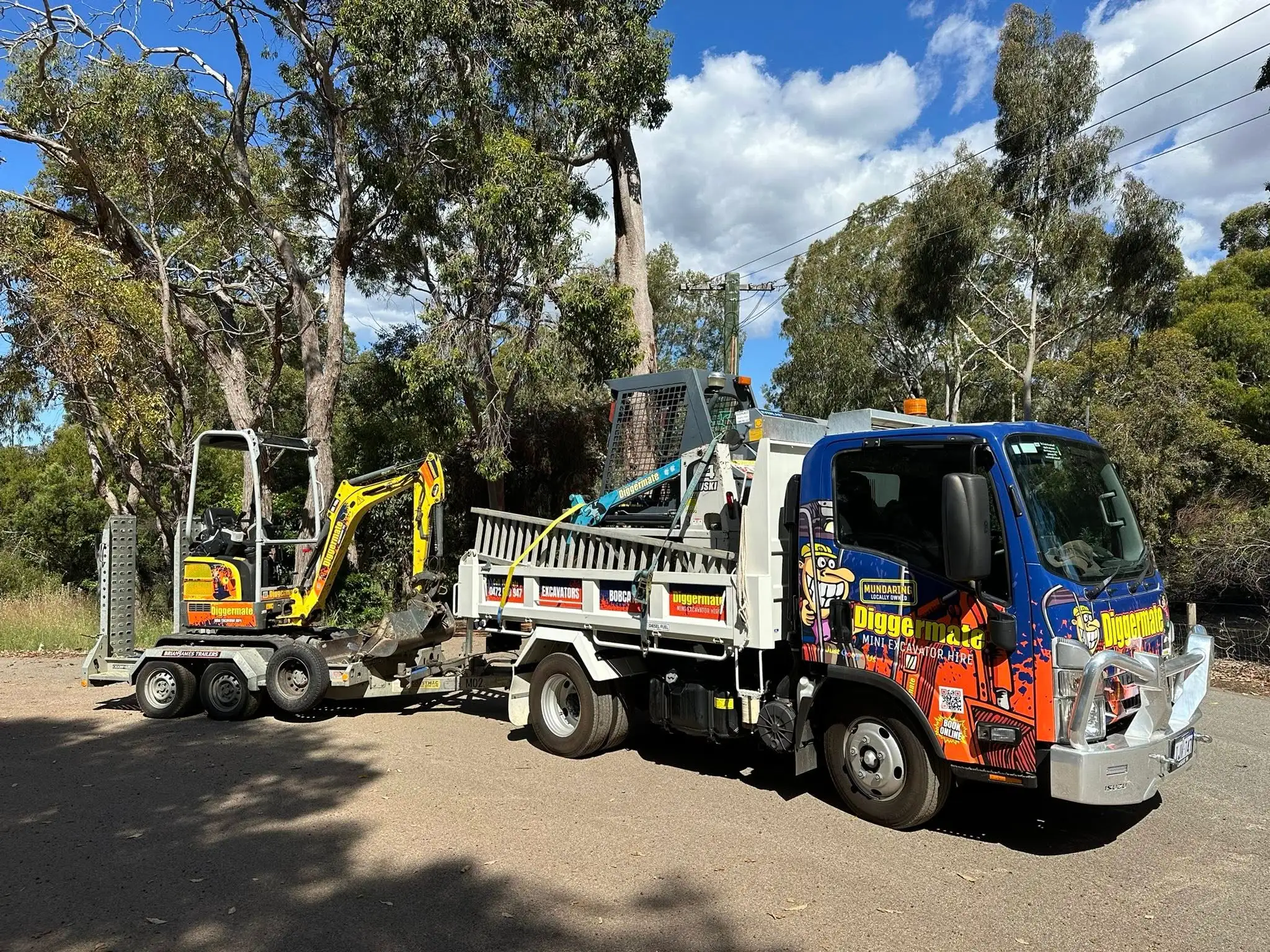
Let’s put all this into a real-world scenario. You’re hiring a 1.7T mini excavator from your local Diggermate, and it comes on a quality, electric-braked trailer.
The trailer’s compliance plate lists these specs:
- ATM: 2,500kg
- GTM: 2,200kg
- Towball Weight: 300kg (This is a calculated figure based on how the load is distributed).
Based on these numbers, your towing vehicle must be legally rated to:
- Tow at least 2,500kg (ATM): The vehicle’s braked towing capacity must meet or exceed the trailer’s ATM.
- Carry a 300kg Towball Download: This weight gets added to your vehicle’s payload, and it must be within your vehicle’s towball rating.
- Handle the Combined Mass (GCM): The total weight of your loaded ute plus the loaded trailer must not exceed your vehicle’s GCM rating.
Need a hand figuring it all out? Don’t sweat it. The friendly team at your local Diggermate depot can help you calculate the right numbers and make sure you have a safe, compliant setup before you hit the road.
3 Common Mistakes When Towing
Even a simple mistake can land you in hot water. Here are some of the most common towing errors and how to avoid them:
- Ignoring the Compliance Plate: This plate contains all the legally binding weight limits for the trailer. Always check it first.
- Overlooking Your Vehicle’s Limits: Your towing capacity isn’t just one number. Always consider your vehicle’s payload, GVM, and GCM.
- Forgetting the Towball Weight: This weight is added to your vehicle’s payload and can easily put you over your GVM limit.
To stay safe and legal on every trip, remember to weigh up the total mass of the entire rig: what you’re towing, what’s on the trailer, and what’s in the tow vehicle.
How Diggermate Makes Towing Simpler
When you hire from Diggermate, you’re set up for success. We take the guesswork out of towing with a simple, stress-free approach:
- Transparent Weight Ratings: Our trailers clearly display their ATM and GTM ratings, giving you peace of mind before you tow.
- Tow-Ready Fleet: Get easy access to a range of mini excavators and tipper trailers that are prepped and ready for towing.
- Hassle-Free Delivery: If towing isn’t an option, our delivery service can get the gear straight to your site.
Don’t risk overloading, accidents, and serious consequences. Browse our hire equipment and book online at your local Diggermate.
More Articles for Safer Towing
Want to become a towing pro or get a head start on your next project? Check out these handy Diggermate guides for more expert insights:
- What is ATM Weight? A Tradie’s Guide: Get a deep dive into the ATM weight, meaning, and why it matters for safely loading and towing your trailer.
- GCM vs GVM: Towing Capacity Basics: Confused about your vehicle’s weight limits? We break down these key terms to ensure your entire tow setup is compliant.
- What is Tare Weight?: Get a clear breakdown of your vehicle’s empty weight and how it impacts your payload capacity for safe and legal loading.
The Takeaway: Trailer Ratings are Key for a Smarter Tow
Australia has some of the toughest towing regulations for a reason. The alphabet soup of ratings like ATM and GTM isn’t designed to confuse, but to keep you safe. While there’s pressure to maximise every kilo, the reality is that trailer weight ratings are hard limits, not suggestions.
Machine hire from Diggermate gives you peace of mind. We’ll help make sure your tow setup is good to go, so you can focus on getting the job done. Still not sure if your vehicle can handle the load? Speak to your local Diggermate team, we’re always here to help.