



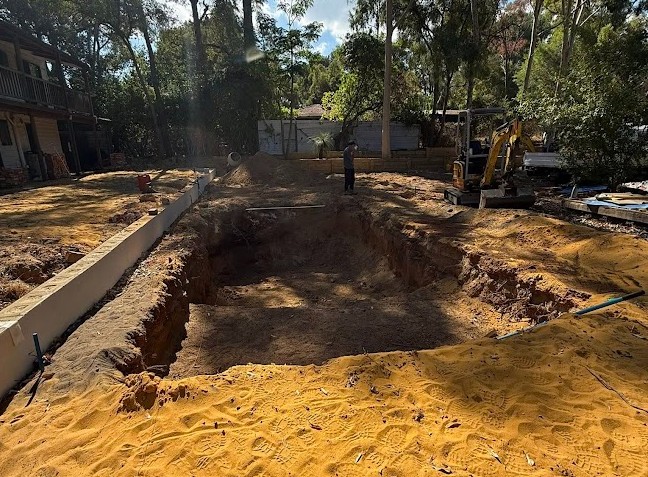

Filling in an unused swimming pool changes more than the surface of a backyard. The permitted method, treatment of the old shell, drainage, backfill and intended future use all need to be agreed before machinery arrives.
Start with the permitted scope
Check the proposal with your local council and the relevant building or project professionals before work starts. Requirements vary by location and site. Do not assume the shell can remain underground, that demolition material can be buried, or that a filled pool area is suitable for future building.
The operator needs the agreed scope and any required approvals, specifications and inspections before confirming the earthworks.
Filling in and full removal are different jobs
A fill-in proposal may involve leaving some structure in place only where that method is permitted and professionally specified. Full removal involves taking out the relevant pool structure and handling the resulting material under the agreed disposal plan.
Tell the responsible professionals how you intend to use the finished area. A lawn, garden, paving and a future building can have different ground-preparation and documentation needs. The appropriate method follows those requirements and the site assessment.
Access and material movement
Measure the narrowest machinery access point and photograph the route from the street to the pool. Include gates, overhead restrictions, slopes, paving and nearby buildings.
The local operator will assess machinery access, the amount of material to move, suitable loading arrangements and whether waste or imported fill needs transport. Agree where materials can be stockpiled and how the rest of the property will be protected.
Drainage, fill and compaction
Have drainage, acceptable fill material, placement and compaction specified for the site and intended use. A finished surface does not by itself establish that the ground below is suitable.
Confirm any inspection or testing requirements and the records you need to retain. Do not choose a standard shell-perforation or rubble-burial method from a general article.
Prepare for the local operator’s assessment
- Your suburb and photos of the pool and surrounding area.
- Approximate dimensions, depth and known pool construction.
- Access measurements, overhead restrictions and site conditions.
- Your intended use of the finished area.
- Any approved plans, specifications or instructions from council and project professionals.
- What needs to be removed and what finishing work is expected.
Locate underground services before excavation. Before You Dig Australia provides utility-plan information; follow asset-owner instructions and arrange any necessary service locating.
What Diggermate can help with
A local Diggermate operator can assess the agreed excavation, material movement and site-preparation work, subject to local availability and site suitability. Confirm demolition, disposal, imported materials, drainage, compaction, inspections and final landscaping as separate inclusions in the scope where required.
Explore excavation and earthworks with an operator, or find your local Diggermate and send the site details. Your local operator confirms availability, machinery and the agreed work.