
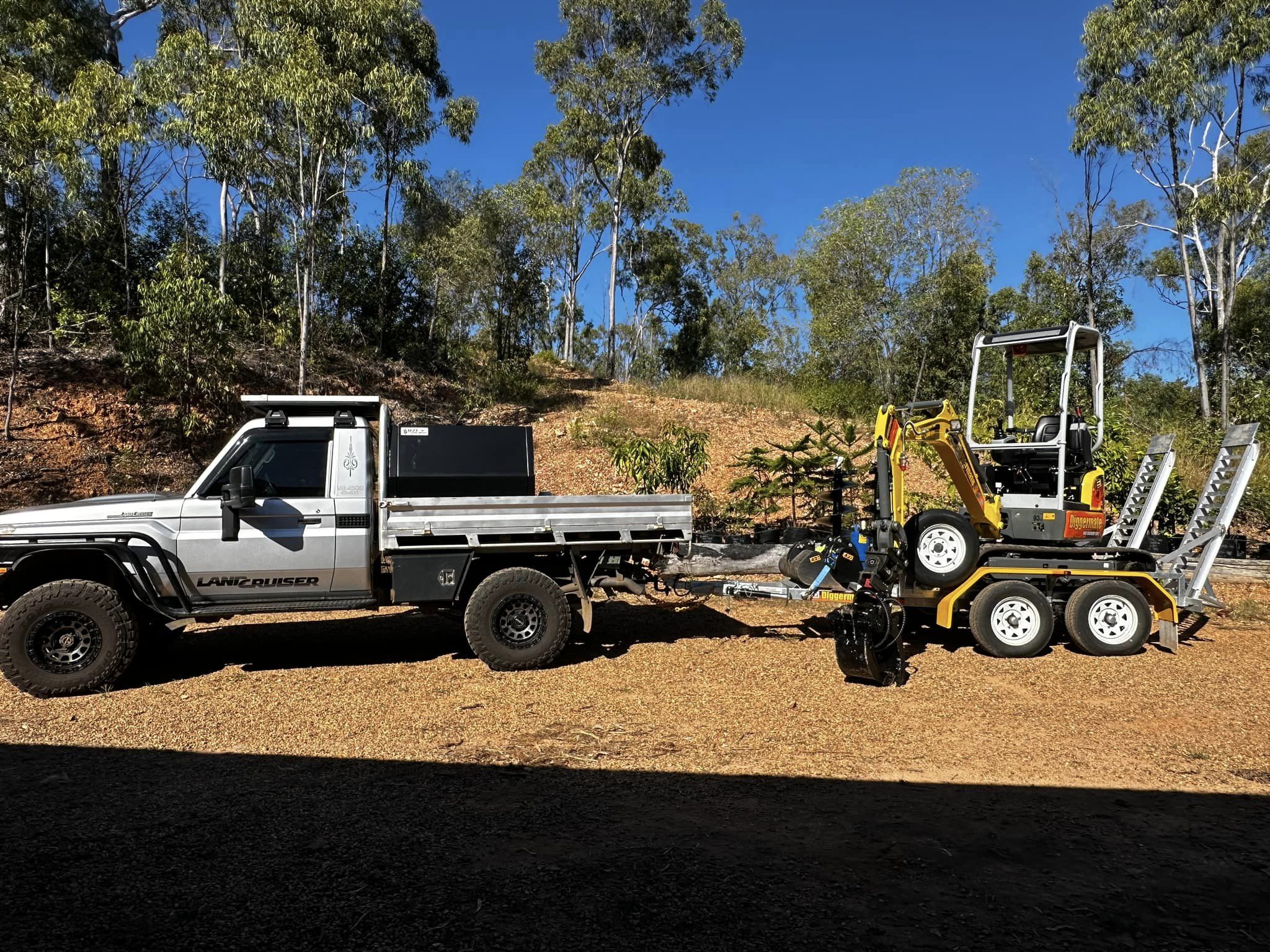

Key Takeaways
- Know the Difference: Tare Mass is your vehicle’s base weight. Kerb Weight includes a full tank of fuel and factory accessories, making it the more practical number to use.
- Stay Safe & Legal: Understanding these weights is critical for correctly calculating your payload, avoiding costly fines, and ensuring your insurance remains valid.
- Simplify your project: Diggermate provides clear weight information for all machines and trailers and offers delivery, so you can get the right gear without the stress.
Need to know the difference between tare mass vs kerb weight? For tradies and DIYers, these terms aren’t just paperwork. They’re the difference between a safe, legal, and insured trip and an expensive fine or defect notice.
This guide will break down the key differences in plain English, so you can calculate your vehicle’s payload and get on with the job without the stress.
What is Tare Mass?
Tare mass, also known as tare weight, is the total weight of your vehicle in its standard, empty form. This includes all essential fluids like engine oil and coolant, but excludes fuel, passengers, cargo, and any accessories not fitted at the factory. Think of it as the vehicle’s baseline weight as it rolls off the production line.
Where to find it:
- Compliance plate (door jamb, engine bay, or in the tray area on some utes)
- Owner’s manual or manufacturer data sheet
Use tare mass as the starting point for your payload and GVM calculations.
What is Kerb Weight?
Kerb weight is the total weight of your vehicle with a full tank of fuel and all essential fluids. Unlike tare mass, kerb weight also includes any factory-fitted accessories like a tow bar or alloy wheels. This is why it is often slightly higher than the tare mass listed on your vehicle’s compliance plate.
In short, it’s the weight of your vehicle as it sits in the driveway, ready to go, before you add any passengers, cargo, or a trailer.
Tare Mass vs Kerb Weight: The Key Differences
This simple comparison table shows exactly how tare mass and kerb weight differ and why those differences matter.
| feature | tare mass | kerb weight |
| includes essential fluids | ✅ | ✅ |
| includes accessories | ❌ standard factory only | ✅ may include factory add-ons (tow pack, alloys, etc.) |
| common use | base weight for payload maths | everyday spec on manufacturer sheets |
| where you’ll see it | compliance plate, manual | brochures, spec sheets, websites |
Bottom line: Kerb weight is often slightly heavier. If you use kerb instead of tare in your sums, you’ll end up with a smaller remaining payload figure. Sometimes that’s the safer assumption, but know which one your compliance plate and insurer expect.
Why These Terms Matter for Tradies and DIYers
So, you know the definitions, but why should you care? The real-world difference between tare mass and kerb weight has a direct impact on your safety, legality, and insurance. Here’s why these terms matter for every tradie and DIYer.
- Calculate real payload: If your GVM is 3,000 kg and tare is 2,200 kg, your payload is 800 kg. That payload includes passengers, tools, and any towball download.
- Use the right figure for checks: Roadside and rego checks may refer to kerb weight on newer models, so you need to know both.
- Stay insured: Overloading can void your insurance claim. It’s easy to run over your limit without realising when you forget to account for passengers or towball weight.
- Plan towing properly: Kerb and tare mass feed into your GCM (Gross Combination Mass) limits once you hitch a trailer.
How To Do the Maths (in 4 Quick Steps)
The maths might sound complicated, but it’s really just a few quick sums. Here’s a simple, four-step process for calculating your vehicle’s payload and staying within its limits.
Step 1: Grab your plate numbers
To start, find your vehicle’s compliance plate and write down the tare mass and GVM (Gross Vehicle Mass). If the compliance plate is unavailable, you can use the kerb weight from your owner’s manual or a manufacturer’s brochure as a reference.
Step 2: List what you’re adding
Now, list everything that will be in or on the vehicle. Your total payload includes:
- Passengers and crew
- All your tools and equipment
- Accessories like canopies, drawers, roof racks, and bull bars
- Towball download from a hitched trailer (this counts towards your vehicle’s payload)
Step 3: Calculate payload used
Add up the total weight of your passengers, tools, accessories, and towball download to get your “payload used” figure.
Step 4: Check you’re under GVM
Finally, add your vehicle’s tare mass to the payload you just calculated. The total must be less than or equal to the GVM listed on your compliance plate.
If the number is over, you need to lighten the load. Or, even easier, you can book a delivery and have Diggermate drop the machine to your site.
Here’s a Practical Example
Let’s put it all together. Imagine your vehicle’s compliance plate lists a tare mass of 2,200 kg and a GVM of 3,000 kg. However, the spec sheet shows a kerb weight of 2,250 kg because it includes factory accessories.
You’re towing a trailer with a 150 kg towball download and have two crew members weighing a total of 200 kg.
Here’s how the two calculations stack up:
- Using Tare Mass: 2,200 kg (Tare) + 150 kg (Towball) + 200 kg (Crew) = 2,550 kg. This leaves you with 450 kg of remaining payload.
- Using Kerb Weight: 2,250 kg (Kerb) + 150 kg (Towball) + 200 kg (Crew) = 2,600 kg. This leaves you with 400 kg of remaining payload.
That 50 kg difference can be the tipping point once you throw in a tool chest or a load of pavers.
Pro Tip: When in doubt, run both figures and work to the stricter result. It builds a safety margin and helps keep your insurance clean.
Common Mistakes and Quick Fixes
Even when you know the rules, it’s easy to make a simple mistake that puts you over the limit. Here are a few common pitfalls to look out for, along with quick fixes to keep your setup safe and legal.
Do I need to account for towball weight?
Yes, absolutely. Towball download is a significant weight that counts directly against your vehicle’s legal payload and GVM. Forgetting to include it in your calculations can easily lead to an overloaded and unsafe setup.
Should I rely only on a brochure’s kerb weight?
Never rely on a brochure alone. While a kerb weight figure from a manufacturer’s brochure is useful, it’s not always the legal number you need. Always cross-check the tare mass on your vehicle’s compliance plate, and if the numbers differ, use the stricter figure to give yourself more payload headroom.
My vehicle has accessories. Do I need to weigh them?
Yes. Heavy bolt-on accessories, such as a canopy, drawers, or bull bar, are not included in your vehicle’s tare mass. Their weight reduces your available payload before you even add tools or passengers. You must weigh them and include their weight in your total payload calculation.
Is it okay to round down my weight limits just a bit?
Never round down. All weight limits, including GVM, GCM, ATM, and GTM, are hard legal limits, not targets to be exceeded. Rounding down or making a hopeful guess can have serious legal and safety consequences if you are ever pulled over for a weight check.
Can I trust the manufacturer’s brochure for my trailer’s weight?
Ignore manufacturer brochures. The official, legal figures for your trailer are found on its compliance plate. These numbers can vary based on the trailer’s build, brakes, and axles, so always read the compliance plate for the official ATM and GTM figures.
How Diggermate Makes it Simple
Hiring from Diggermate removes the guesswork from towing. We provide all the clear weight information you need for our machines and trailers—including tare, ATM, GTM, and towball download—so you can match them perfectly to your ute’s GVM and tow limits.
Don’t want to tow? No problem. Simply book our delivery and pickup service. We’ll drop the machine off at your site and collect it when you’re done, so you can focus on the job without the stress of towing.
- Easy-to-operate machines: Our mini excavators are suited for tight access jobs.
- Safe, tow-ready trailers: Our tipper trailers are electric-braked and built for the job.
- Expert advice: Our friendly depot team will “sanity-check” your numbers before you roll out.
- Delivery and pickup: No fuss, no towing, no problem.
Final Word: Your Project, Simplified
Knowing the difference between tare mass vs kerb weight is key to staying safe, legal, and insured. If you’re still unsure about your vehicle’s limits, don’t guess. The team at your local Diggermate is here to help.
Bring in your vehicle’s plate details, and we’ll run the numbers with you and help set up the perfect machine and transport option for your job. Or, skip the sums entirely and contact us or book your machine delivery today.