

Key Takeaways
- Seven Simple Steps: This guide breaks down the process of draining a pool into a straightforward, step-by-step process that anyone can follow.
- Ensuring Your Safety: To protect your property and avoid fines, check with your local council about drainage rules and choose a dry day to prevent damage.
- Local Machine Hire: Diggermate provides the right equipment, from mini excavators to tipper trucks, to help you complete the next phase of your pool project.
If you’re a homeowner, tradie, or DIYer tackling a backyard reno or major pool maintenance, you might be wondering: how do I drain a pool without causing damage or copping a fine?
Draining a pool isn’t as simple as pulling the plug. Doing it the wrong way can damage your pool structure, harm the environment, or violate local council regulations.
This guide walks you through how to drain a pool safely, step-by-step, with tips to protect your property, equipment, and wallet.
Why Would You Drain a Pool?
While it’s a big job, there are a few important reasons you might need to empty your pool.
- For Repairs: To fix major cracks, resurface the interior, or conduct plumbing repairs.
- For a Fresh Start: When the water is old, dirty, or so chemically unbalanced that it’s beyond repair.
- For Backyard Renos: To make room for a new deck, patio, or to re-landscape the area.
- For Demolition: As the essential first step to removing the pool entirely.
That said, only drain your pool when absolutely necessary. An empty pool can shift, crack or “pop” out of the ground, especially if the water table is high.
Step-by-Step: How to Drain a Pool Safely
Draining your pool doesn’t have to be stressful. We’ve broken down the process into seven simple steps to help you get the job done right.
1. Check Local Regulations First
Before you start anything, the very first step is to contact your local council. Many areas in Australia have specific rules about where and how pool water can be discharged to avoid environmental damage or flooding.
You might be required to:
- Ensure the water is filtered or dechlorinated.
- Release the water into the sewerage system, not the stormwater drains.
- Provide notification to the council before draining.
Pro Tip: This isn’t just about red tape. Failure to comply can result in hefty fines and damage to local ecosystems. A quick call or visit to your council’s website is always worth the effort.
2. Hire a Submersible Pump
Your pool’s filter pump isn’t designed for this job. The right tool is a powerful submersible pump.
A decent flow rate will save you hours, especially for large volumes of water. Remember to also consider hiring the necessary hoses and extension leads to reach your drainage point.
Pro Tip: To prevent damage to the pump’s motor, make sure the pump is always fully submerged. Don’t let it run dry, and stop pumping once you get close to the bottom of the pool.
3. Pick the Right Day
Timing is critical. Choose a dry day with no rain forecast. If the ground is saturated from recent rainfall, the pressure from the water table can cause the empty pool shell to lift, shift, or even “pop” out of the ground.
Pro Tip: This is a crucial step, especially for fibreglass pools and old concrete pools. A pool that has “popped” is incredibly difficult and expensive to fix, so it’s a risk you want to avoid at all costs.
4. Start Pumping from the Deep End
With your pump and hose ready, you can start the process.
- Place the pump: Lower the submersible pump to the deepest point of the pool.
- Secure the hose: Run the discharge hose to your approved drainage point (like a sewer inspection outlet or a stormwater connection).
Don’t pump pool water directly onto your lawn, the street, or a neighbour’s yard. The chemicals can harm plants and illegally pollute stormwater systems.
Pro Tip: To prevent the hose from moving or becoming a trip hazard, secure it with bricks or pegs along its route. This ensures the water flows to the correct spot without any surprises.
5. Monitor Progress Closely
Never leave your pool unattended while it’s draining. Stay on-site and keep a close eye on these key factors:
- Pump performance: Ensure the pump is working correctly and the water is flowing steadily.
- Water flow: Check that the water is being discharged to the correct, approved location.
- Pool structure: Watch for any signs of cracking, bulging, or shifting in the pool walls.
Once there’s about 15–30 cm of water remaining, turn off the pump and remove it from the pool.
Pro Tip: Don’t be tempted to pump the pool completely dry. Leaving a small amount of water at the bottom helps maintain structural integrity by weighing down the base and counteracting external pressure from the ground.
6. Clean or Repair as Needed
With the pool drained, you can now get to work on your original plan. This might include:
- Scrubbing away algae or calcium buildup.
- Repainting or resurfacing the interior.
- Fixing cracks or plumbing issues.
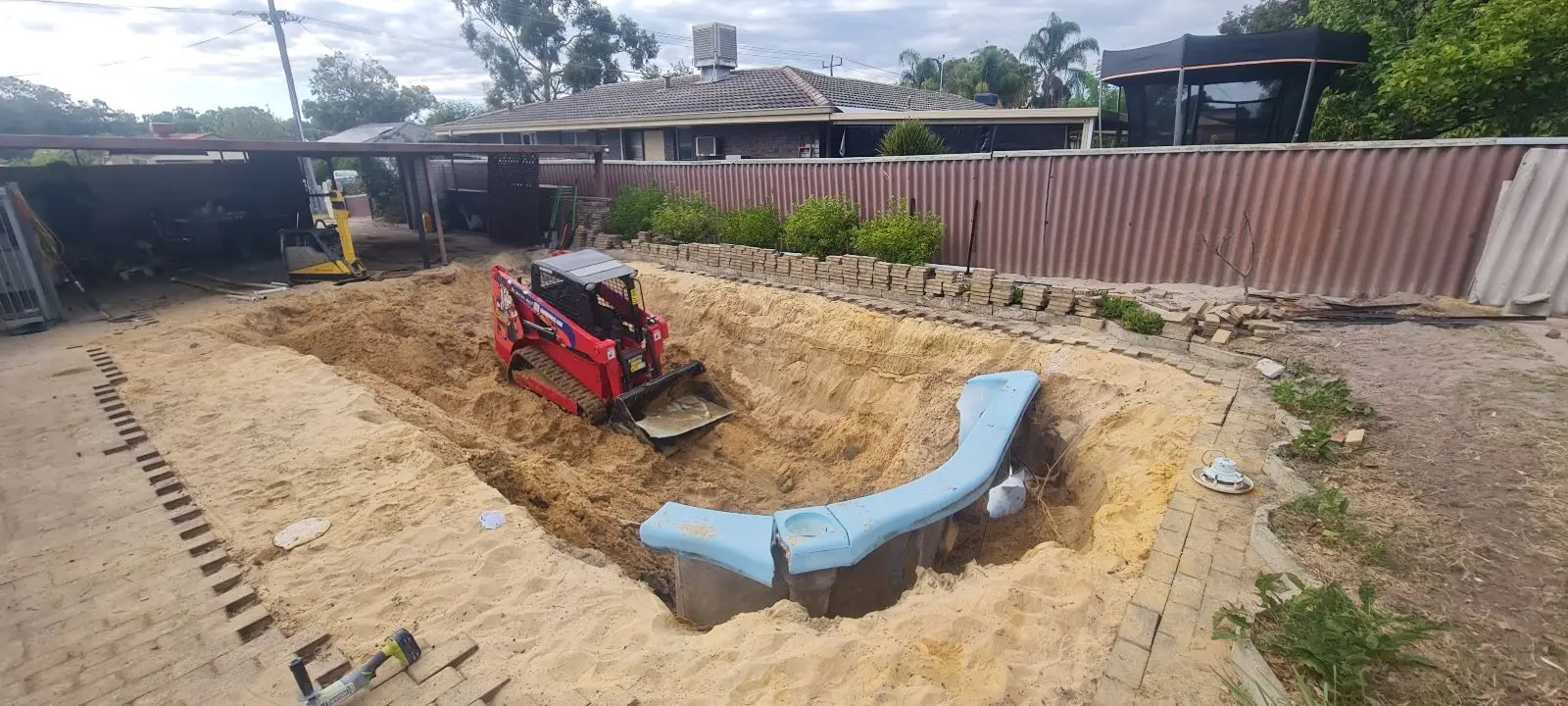
If you’re removing the pool entirely or digging around the shell for plumbing repairs, you might also need a mini excavator hire. Check your local Diggermate location to arrange a machine that’s perfect for tight access.
Pro Tip: Once the pool is drained, get the work done quickly. Leaving a pool empty for an extended period can cause the surrounding soil to dry out and shift, increasing the risk of the shell cracking or popping.
7. Refill and Rebalance Water
Once your cleaning or repairs are complete, it’s time for the final step. Refill the pool with fresh water, and as it fills, you’ll need to re-establish the correct chemical balance with chlorine, pH balancers, and other necessary products. If you’re not confident doing this yourself, it’s best to get a pool technician to handle it.
Pro Tip: Don’t just dump in a bunch of chemicals. Add small amounts at a time and test the water regularly to slowly and safely achieve the correct balance.
3 Common Mistakes to Avoid
To protect your property and avoid fines, steer clear of these common mistakes when draining your pool.
- Pumping water into the street or stormwater drains: It’s illegal in most councils and can harm local ecosystems.
- Leaving the pump running unattended: An overflow or a shifting pool structure can happen fast.
- Leaving the pool empty for too long: This can cause the shell to crack or ‘pop’ out of the ground, leading to expensive damage.
Need Gear to Drain or Work Around a Pool?
At Diggermate, we’ve got the tools to make your project easier.
- Mini Excavators: Perfect for demolishing the pool shell or digging out surrounding areas when access is tight.
- Skid Steer Loaders: Ideal for moving excavated soil and rubble into a truck or pile.
- Tipper Trucks: The best way to remove all the soil and debris from your site.
Book online now and pick up from your nearest Diggermate location.
Final Word: Safety First, Every Time
Knowing how to drain a pool properly is the key to avoiding expensive damage and legal trouble. With careful planning and an understanding of local rules, this big job can be simple enough for any tradie or DIYer.
Whether you’re starting a major renovation or removing a pool entirely, Diggermate has the right equipment, from mini excavators to tipper trucks, to help you get the job done right. Hire your gear from Diggermate and enjoy local, reliable, and easy-to-book support.